
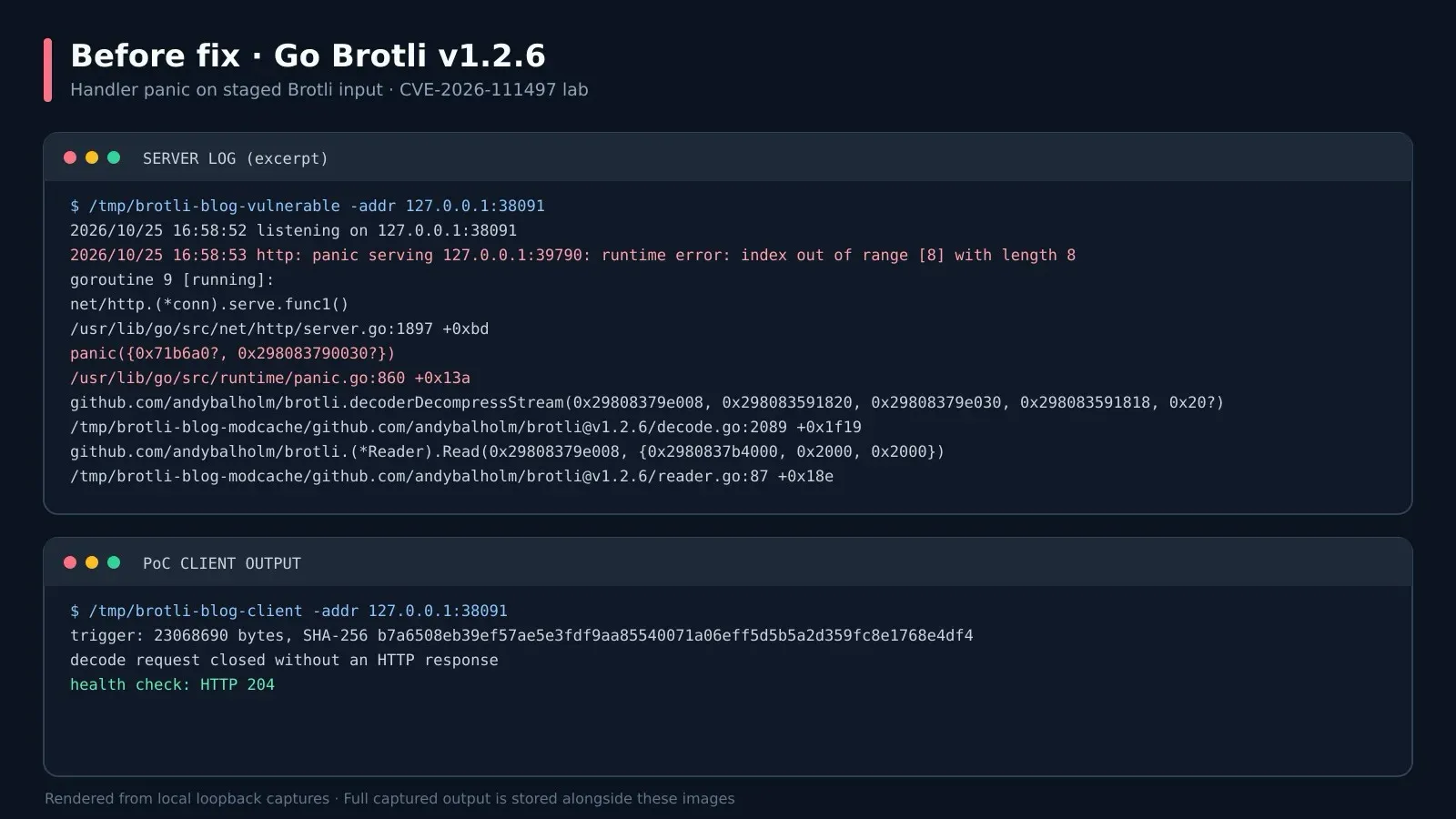
The discovery of a parallel fix in the Go implementation of the Brotli compression library has significantly expanded the potential attack surface for the Node2Shell vulnerability. Sweet Security engineer Tomer Ben Gera identified that a remediation was pushed to the Go Brotli library on October 23, confirming that the vulnerability class exists beyond its original C implementation. This development forces enterprise security teams to look past Node and PHP environments, as the flaw now directly impacts critical Go-based HTTP infrastructure and widely adopted cloud-native networking components.
Expanding the Node2Shell Attack Surface to Go
The identification of the Go Brotli library fix suggests that the underlying memory-management flaw present in the C implementation was replicated in Go. This finding shifts the scope of the Node2Shell vulnerability from a language-specific issue to a broader architectural concern. Sweet Security’s research highlights that the Go Brotli library serves as a direct or indirect dependency for several major HTTP frameworks. The scale of this exposure is substantial, with the affected frameworks possessing a combined GitHub adoption exceeding 130,000 stars. Notably, the Traefik framework alone has accumulated over one billion cumulative Docker image pulls, illustrating the massive reach of this dependency within modern containerized environments and distributed cloud architectures.
Critical Dependencies in Traefik, Fiber, and Iris
Sweet Security’s analysis identifies four major Go HTTP projects with confirmed dependencies on the affected library, each presenting different exposure profiles. Traefik uses the library as a direct dependency within its Compress middleware for encoding outgoing Brotli responses. Fiber carries an indirect dependency through fasthttp in v2.52.9, where request-body decoding via Ctx.Body() and JSON BodyParser could allow client-controlled compressed bodies to trigger the flaw. Iris also utilizes the library as a direct dependency for both response encoding and request decoding. Finally, fasthttp carried the library as a direct dependency through v1.73.0 before migrating to an alternative in v1.74.0. Because dependency presence does not guarantee reachability, organizations must verify specific versions and whether Brotli decoding of client-controlled input is active.
Key Takeaways
- A fix was pushed to the Go implementation of the Brotli compression library on October 23, confirming the vulnerability exists in Go.
- Major affected frameworks include Traefik, Fiber, and Iris, which have a combined GitHub star count exceeding 130,000.
- Traefik, a primary component in many infrastructures, has recorded over one billion cumulative Docker image pulls.
TechInsyte's Take
In our view, this discovery highlights a critical blind spot in traditional vulnerability management. The fact that Node and Go binaries often bypass predictable installation paths means standard scanners may fail to detect these vulnerable libraries. This signals that enterprise security posture must shift from static registry scanning toward deep runtime visibility. For CIOs and CISOs, the takeaway is clear: if your infrastructure relies on Go-based reverse proxies or high-performance web frameworks, you cannot assume safety based on language-specific remediation. You must verify the actual execution state of your Brotli dependencies to ensure that client-controlled inputs are not providing a direct path to exploitation.
Questions & Answers
How does the Node2Shell vulnerability impact Go-based cloud infrastructure?
The vulnerability extends to Go-based infrastructure because the Go Brotli library contains the same memory-management flaw found in the C implementation. This affects major frameworks like Traefik, Fiber, and Iris, which are used extensively in containerized and cloud-native environments.
Why might traditional vulnerability scanners fail to detect this specific risk?
Traditional scanners often rely on known installation paths and package registries. Because Node and Go binaries do not always follow these predictable paths, scanners may miss the presence of the vulnerable Brotli library, necessitating runtime visibility to confirm actual exposure.
What specific configurations should enterprise IT teams audit immediately?
Teams should inventory Go-based HTTP services to identify Brotli library dependencies and verify versions against patched releases. Crucially, they must determine if Brotli decoding of client-controlled input is enabled within their specific application or middleware configurations.
Which specific frameworks are identified as having confirmed dependencies?
The research identifies Traefik, Fiber, Iris, and fasthttp (up to v1.73.0) as projects carrying the affected library as either a direct or indirect dependency.
Source: Sweet Security