
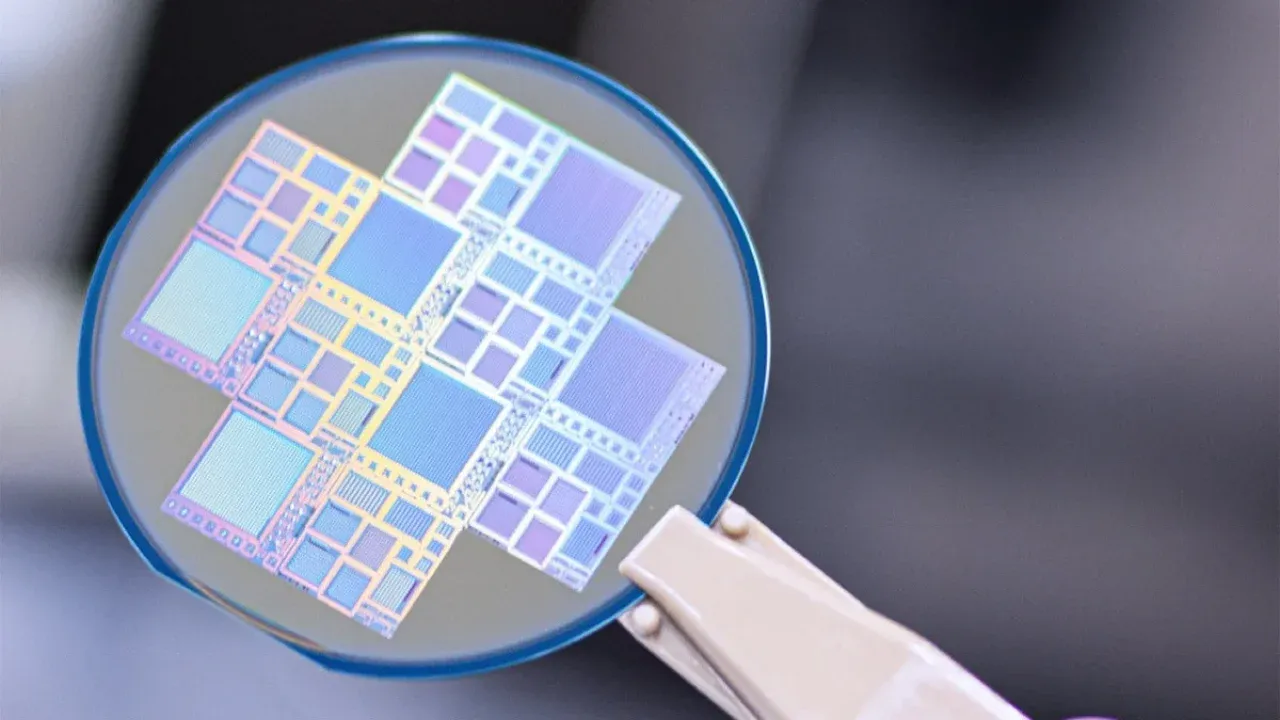
Great Sky is positioning its specialized hardware to solve the extreme latency and energy demands of real-time plasma control in fusion reactors. By moving away from traditional silicon-based architectures, the company aims to address the fundamental computational bottlenecks currently hindering both the fusion industry and broader data-center economics. Through a partnership involving Brookhaven National Lab, Princeton Plasma Physics Laboratory, and the DIII-D National Fusion Facility, Great Sky has demonstrated that its analog neural networks can process high-velocity sensor data essential for maintaining stable tokamak operations.
Superconducting Neural Networks for High-Speed Plasma Sensing
The partnership successfully demonstrated Great Sky’s latest superconducting neural-network chip by executing three critical tasks relevant to tokamak operation. To test the hardware's ability to handle extreme data velocities, the team injected data from the DIII-D tokamak into the chip for anomaly classification and disruption prediction. This data was captured at a sample rate of one million samples per second, a speed the company claims the chip maintained without interruption.
Beyond physical reactor data, the team utilized simulated signals from TORAX—a simulator developed by the Google DeepMind Fusion team—to predict sawtooth instabilities. This specific capability suggests the hardware could serve as a real-time simulation component for plasma state monitoring. Unlike conventional CPUs and GPUs that rely on silicon transistors for digital processing, Great Sky’s architecture implements analog neural networks using superconducting circuitry paired with optical communication. This fundamental shift in hardware design is intended to provide superior speed and energy efficiency compared to standard semiconductor-based AI accelerators.
Scaling Hardware Beyond Fusion Applications
While the current demonstration focuses on the immediate requirements of fusion energy, Great Sky is framing this technology as a broader solution for high-stakes computational environments. The company, which spun out after a decade of development at the National Institute of Standards and Technology (NIST), is targeting sectors where "intelligence at the boundaries of physics" is required. According to CEO Jeff Shainline, the roadmap includes expanding these superconducting systems into quantum error correction, advanced cybersecurity, and video intelligence featuring continual learning.
The company is currently focused on scaling the complexity of its neural networks. Following the successful processing of high-speed tokamak data, the development team plans to demonstrate a next-generation chip featuring a neural network ten times larger than the current iteration in December. This scaling effort aims to prove that the advantages of superconducting analog computing can be maintained as the computational density increases, potentially offering a new paradigm for enterprise AI infrastructure that faces the energy-efficiency limits of traditional silicon.
Key Takeaways
- Great Sky demonstrated a superconducting neural-network chip capable of processing tokamak data at a rate of one million samples per second.
- The hardware utilizes analog neural networks with superconducting circuitry and optical communication rather than traditional silicon transistors.
- The company plans to debut a next-generation chip with a 10x larger neural network in December.
TechInsyte's Take
In our view, Great Sky is attempting to bypass the "silicon ceiling" that currently limits both real-time industrial control and massive-scale AI training. By leveraging superconducting circuitry, they are not just building a faster chip, but a fundamentally different computational primitive. The successful integration with Google DeepMind’s TORAX simulator is a critical validation of their ability to operate within existing high-end research workflows. If the December demonstration of a 10x larger network succeeds, it will signal that analog superconducting AI is moving from a laboratory curiosity toward a viable architectural alternative for specialized, high-velocity edge computing and quantum-adjacent infrastructure.
Questions & Answers
How does Great Sky’s hardware architecture differ from standard enterprise GPUs?
Unlike standard GPUs that use silicon transistors to process digital information, Great Sky utilizes superconducting circuitry to implement analog neural networks, integrated with optical communication to enhance speed and energy efficiency.
What specific fusion reactor challenges does this technology address?
The chips are designed to provide the real-time sensing and response speeds necessary to manage "searing plasmas." Specifically, the demonstration showed the ability to perform anomaly classification, disruption prediction, and sawtooth instability prediction at high sample rates.
What is the projected timeline for Great Sky's hardware scaling?
The company intends to demonstrate its next-generation chip, which will feature a neural network 10x larger than the current version, in December.
Beyond fusion energy, where else could this technology be deployed?
Great Sky identifies several high-performance applications, including the control and error correction of quantum systems, advanced cybersecurity, and video intelligence applications that require continual learning.
Source: Great Sky