Dream Labs is attempting to solve the fundamental intelligence gap in robotics by decoupling physical hardware from specialized programming. The San Francisco-based startup, founded by former NVIDIA researchers, has secured $90 million in seed funding to scale its "Dream-1" foundation model. Led by B Capital and Kindred Ventures, the investment aims to transition robotics from single-task machines to general-purpose agents capable of executing diverse commands via a public API. By positioning its intelligence as a cloud-based service, Dream Labs is targeting a massive market of low-cost hardware that currently lacks the built-in reasoning required for autonomous, multi-task operations in complex environments.
Dream Labs $90M Seed Funding and API Launch
The $90 million seed round, which included participation from A.Capital, Unusual Ventures, SV Angel, Wing VC, Scribble VC, and Adrian Aoun, marks a significant capital injection into the robotics intelligence sector. Dream Labs is utilizing this funding primarily to secure compute resources as it expands the range of tasks and hardware compatible with its Dream-1 model. The company is simultaneously launching the Dream API, which it describes as the first publicly available interface capable of translating a robot's camera feed and plain-English instructions into direct motor commands. This launch is supported by more than 20 hardware partners, utilizing robots that currently retail between $2,000 and $10,000.
The strategic move addresses a persistent bottleneck in industrial and consumer robotics: the high cost and time required to program specific tasks. Currently, many of the 5 million industrial robots in operation are limited to single-task functions, meaning knowledge gained by one machine cannot be transferred to another. Dream Labs is positioning its Dream API as a way to bypass this limitation, allowing developers to connect robots with grippers and begin task execution without months of specialist programming. By running models in global data centers, the company intends to provide low-latency responses to visual inputs and natural language prompts, regardless of the robot's physical location.
Dream-1 Model Architecture and Deployment Options
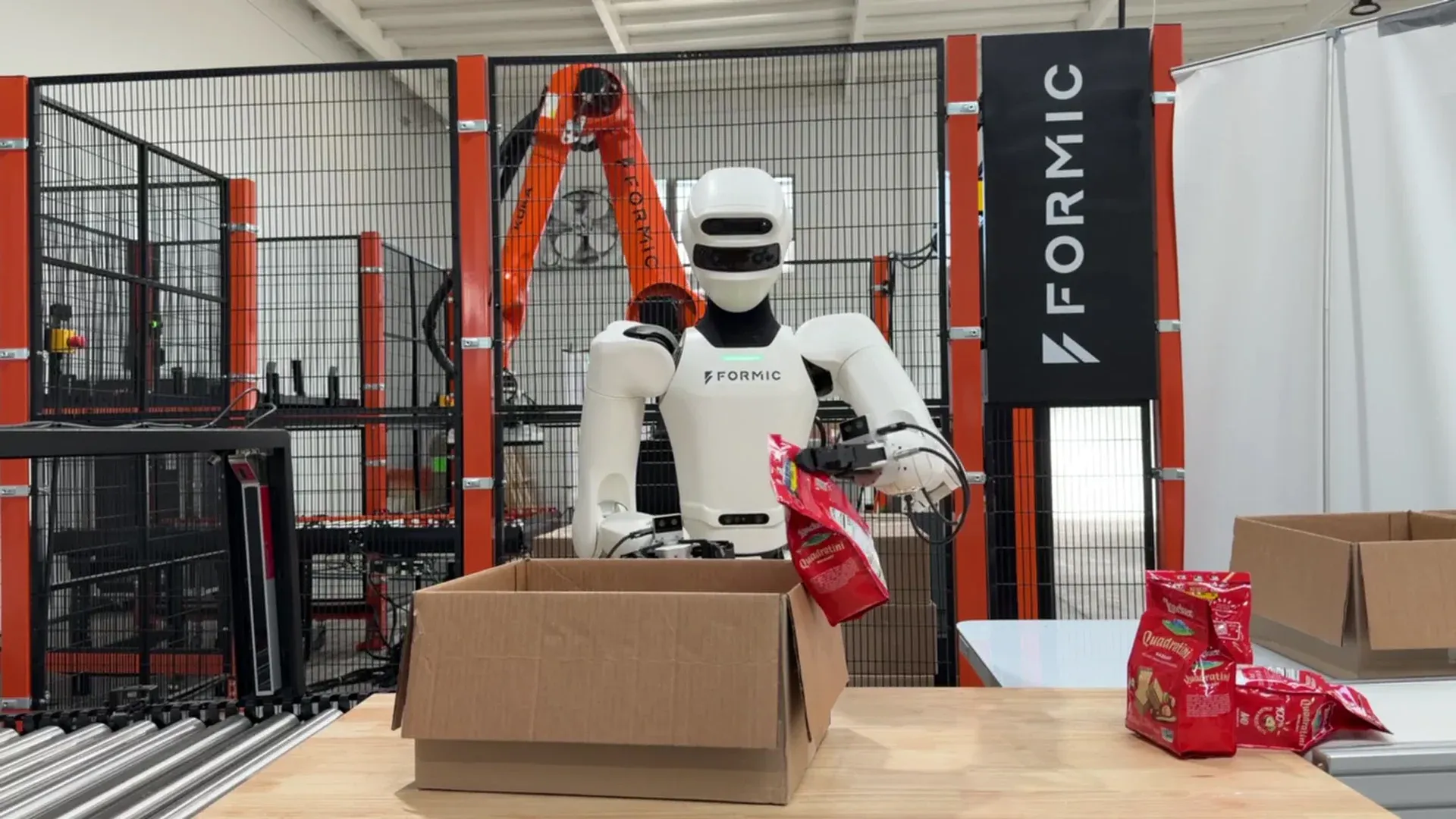
The core of the Dream Labs offering is the Dream-1 model, a foundation model trained on video data of humans performing everyday tasks. Unlike traditional robotics software that relies on machine-specific training, Dream-1 uses video-based learning to predict physical outcomes and determine necessary actions. This approach allows for "zero-shot" capabilities, meaning the model can control a two-armed robot with parallel grippers without requiring prior data for that specific hardware. The company claims this enables a robot to be operational in minutes rather than months, functioning much like a driver transitioning between different rental cars.
To support diverse enterprise needs, Dream Labs is deploying three distinct service layers. The Dream API provides the primary interface for translating visual and linguistic inputs into action. For specialized requirements, the company offers "Fine-tuning as a Service," which allows developers to submit small batches of demonstration data to receive a tailored model within hours. Finally, the "Robot Playground" allows users to command robots in the company's San Francisco office via a web browser. While the model currently focuses on tabletop tasks like picking, placing, and folding laundry, the company plans to expand support to wheeled mobile robots and dexterous hands.
Key Takeaways
- Dream Labs raised $90 million in seed funding led by B Capital and Kindred Ventures to scale its robot foundation model.
- The company launched the Dream API, enabling robots to translate camera feeds and natural language into motor commands.
- The Dream-1 model supports over 20 hardware partners and can control robots with grippers using zero-shot capabilities.
TechInsyte's Take
In our view, Dream Labs is making a high-stakes bet that the future of robotics lies in "intelligence-as-a-service" rather than proprietary, integrated software. By targeting the $2,000 to $10,000 hardware segment, they are addressing a massive, underserved layer of the market where hardware is increasingly commoditized but remains functionally "dumb." If the Dream-1 model can truly deliver zero-shot control across diverse manufacturers, it could fundamentally shift the value chain, moving the primary profit centers from hardware manufacturers to the providers of the underlying cognitive models. However, the success of this model depends entirely on the ability of cloud-based inference to meet the rigorous, real-time latency requirements of physical movement. If Dream Labs can bridge the gap between high-level linguistic reasoning and low-level motor precision at scale, they may well become the standard operating system for the next generation of general-purpose robotics.
Questions & Answers
How does the Dream-1 model achieve hardware-agnostic control?
Dream-1 is trained on video of humans performing tasks rather than on specific robotic datasets. This allows the model to learn the underlying physics and logic of the world, enabling it to predict actions and translate visual inputs into motor commands for new hardware, such as robots with grippers, without requiring task-specific training data.
What specific service models does Dream Labs offer to developers?
Dream Labs provides the Dream API for direct translation of visual and natural language inputs into robot actions, a "Fine-tuning as a Service" for creating tailored models from small batches of demonstration data within hours, and a "Robot Playground" for remote testing via a web browser.
What is the intended use case for the $90 million in new funding?
The company intends to use the seed funding primarily to acquire compute resources. This capacity is necessary to expand the variety of tasks the Dream-1 model can perform, increase the number of supported robots, and scale the infrastructure to accommodate more users.
What are the current functional limitations of the Dream-1 model?
Currently, Dream-1 is optimized for tabletop tasks, including folding laundry and picking and placing objects. While the company plans to expand into wheeled mobile robots and dexterous hands, these capabilities are listed as future developments rather than current features.
Source: Dream Labs